
In the hospitality sector (from luxury hotels along Orchard Road and Marina Bay to resort properties in Sentosa), one rule overrides all others: Guest experience is non-negotiable.
A single guest complaint about a humid room, warm lobby air, or inadequate hot water pressure can trigger a wave of negative online reviews that directly damages RevPAR (Revenue Per Available Room) and brand reputation.
Consequently, hotel General Managers and Chief Engineers view energy audits with extreme caution. They worry that meeting BCA’s strict Energy Use Intensity (EUI) reduction targets under the Green Mark Super Low Energy (SLE) framework or MEI regime will force them to compromise indoor environmental quality (IEQ).
The truth is, modern hotel energy compliance is entirely silent—achieving dramatic energy savings while actually improving guest comfort SLAs.
The Hospitality Energy Paradox
Hotels operate on a 24/7/365 cycle with massive, unpredictable occupancy swings. Peak cooling demand shifts rapidly between morning breakfast rushes in function halls to late-night low-occupancy room cycles.
Running a central chilled-water plant at full capacity during low-occupancy periods creates massive operational inefficiency.
The 3 Silent Energy Wins for Hotels
-
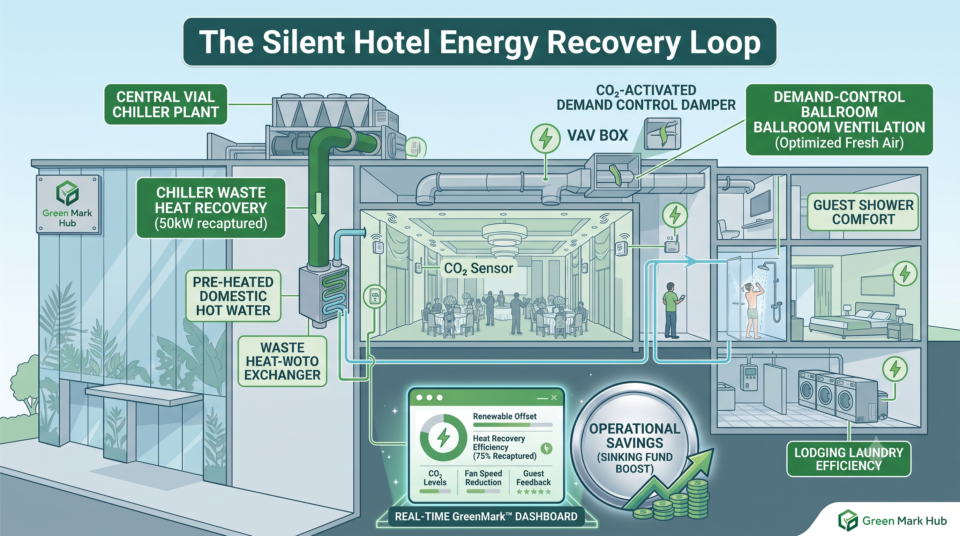
Waste Heat Recovery (Free Hot Water): Central water-cooled chillers generate immense amounts of waste heat. By installing desuperheaters or heat-recovery chillers, that waste heat is captured to produce 100% of the hotel’s 24/7 domestic hot water supply for guest showers and laundry—completely eliminating boiler diesel/gas costs while boosting chiller efficiency.
-
Demand Control Ventilation (DCV) in Event Spaces: Ballrooms and function halls often waste massive amounts of cooling energy when vacant. Installing CO₂ sensor-driven fresh air dampers ensures air handling units (AHUs) automatically scale cooling based on real-time crowd size.
-
Algorithmic Chiller Staging: Integrating smart control logic enables central plants to automatically stage small magnetic-bearing chillers during low-occupancy weekday nights, ensuring optimal $kW/RT$performance without drifting room temperatures or humidity levels.
The Bottom Line
Achieving BCA Green Mark compliance in a hotel does not mean raising thermostat settings or dialing back lobby air conditioning. By leveraging waste heat recovery and automated demand controls, hotels cut operational OPEX silently—protecting both bottom-line profits and guest satisfaction.