
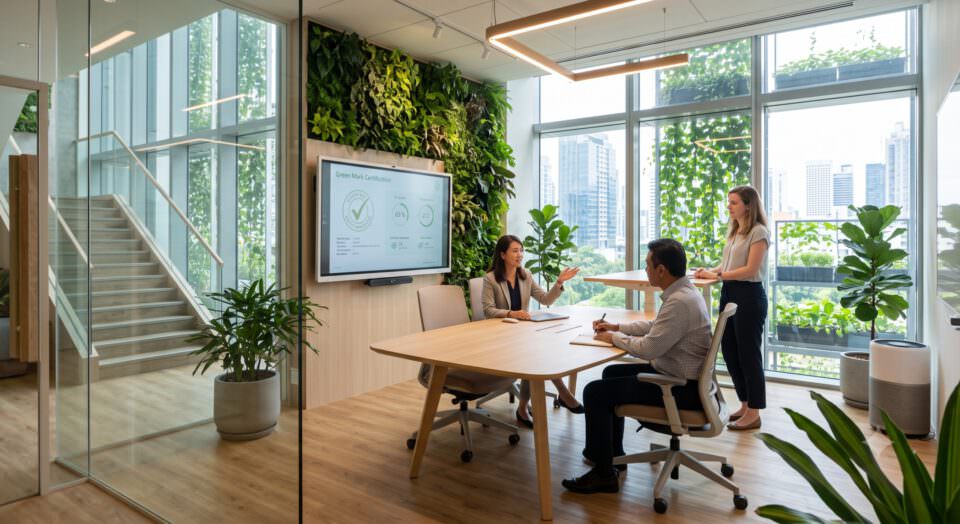
We spend, on average, more than 90% of our time within buildings. The indoor environment profoundly influences our physical health, mental comfort, and social interactions. A poorly designed building can contribute to problems like poor indoor air quality, lack of daylight, and noise pollution, leading to “sick building syndrome,” reduced productivity, and increased stress.
Recognizing this, the GM:2021 Health and Wellbeing (Hw) section was co-created using leading evidence-based health and physical environment research, translating this knowledge into robust indicators for the built environment. Its goal is simple yet powerful: to facilitate the mental, physical, and social well-being of building occupants through the design,construction, operation, and retrofit of buildings.
The BCA Green Mark Wellness Framework
The Health and Wellbeing section is structured around three key pillars that address different facets of the human experience within a building. Projects attaining exemplary performance in this section will be awarded a corresponding badge.
1. Physiological Wellbeing: Supporting Physical Health
This pillar focuses on the immediate physical needs of the occupants, aiming to reduce illness and promote physical activity.
-
Indoor Air Quality (IAQ): A cornerstone of a healthy building. The standards set stringent requirements for ventilation to ensure a constant supply of fresh air. It also focuses on clean air through high-efficiency filtration (such as ePM1 or MERV 14 filters), UVGI disinfection systems, and the discouragement of pollution-emitting materials. Buildings are incentivized to use low-emissive materials, such as low-VOC paints, adhesives, flooring,and furniture, to minimize indoor contaminants.
-
Thermal Comfort: Recognizing that thermal preferences are individual, Green Mark encourages building systems that allow for a range of thermally comfortable spaces. This includes zonal controls and hybrid cooling systems that blend traditional air conditioning with elevated temperatures and fans, giving occupants greater ability to adjust their surroundings.
-
Active Design: To combat sedentary lifestyles, the standards promote active mobility with safe, convenient access for pedestrians and cyclists, including secure bicycle parking and shower facilities. Internally, it encourages active interiors with highly visible, well-ventilated staircases and active furnishings like standing or height-adjustable desks to discourage prolonged sitting.
2. Psychological Wellbeing: Fostering Mental Comfort
This pillar addresses the cognitive and emotional impact of the indoor environment, seeking to reduce stress and enhance mental clarity.
-
Biophilia: Integrating nature into the built environment has proven mental health benefits. Green Mark rewards designs that foster direct connections to plants, water, and light, as well as indirect connections via natural materials and patterns. Requirements include accessible sky terraces, rooftop gardens, and fixed indoor planting in key common areas.
-
Daylighting and Views: Access to natural light and the outdoors is essential for well-being. The standards evaluate the project’s ability to provide significant views to the outside and high-quality daylighting. Criteria are set for the Colour Rendering Index (CRI) and responsive light controls of artificial lighting, and projects are encouraged to implement circadian lighting systems that mimic natural daylight patterns.
-
Acoustics: Excessive noise can be a major source of stress. Green Mark incentivizes sound zoning design approaches that implement passive and active acoustic controls to minimize external noise and create a positive,productive soundscape.
3. Social Wellbeing: Building Stronger Communities
This pillar emphasizes inclusivity, community building, and the overall social infrastructure of the building.
-
Inclusive Design: Buildings should be accessible to all. Green Mark recognizes projects that achieve the BCA Universal Design Mark, ensuring user-friendly environments for people of all ages and abilities.
-
Restorative and Community Spaces: Healthy environments provide a range of spaces catering to a broad spectrum of human activities. This includes social hub areas for interaction and dedicated restorative spaces for relaxation and reflection.
-
Well-being for All: In a notable step towards holistic social sustainability, the standards include requirements for the provision of proper and reasonable rest areas for outsourced workers, such as security officers and cleaners.
The Path Forward: Certified for Health
The inclusion of health and wellness in the BCA Green Mark standards represents a crucial evolution in the green building movement. It moves beyond a purely environmental focus to a more user-centric approach, one that values the occupants as the ultimate measure of a building’s success. By providing clear performance metrics and incentives, the standards are transforming Singapore’s built environment, fostering a new generation of buildings that not only protect the planet but also nurture the people within them. For building owners and developers, the path to a high Green Mark rating is now unmistakably intertwined with the path to creating a healthier, happier, and more productive society.