
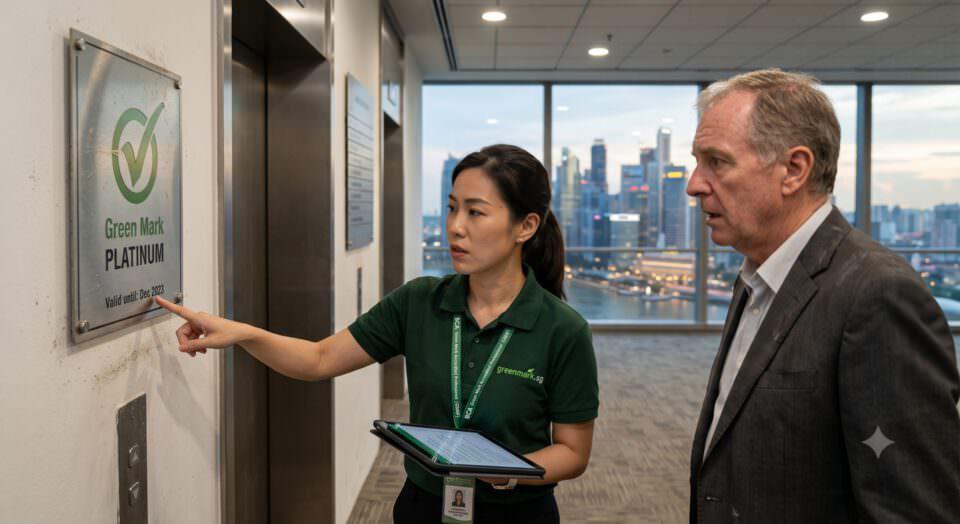
The Recertification Trap: Why a “Voluntary” Green Mark is Mandatory for Asset Value
Published: October 20, 2026 Author: greenmark.sg Regulatory Watch Team Category: BCA REGULATIONS & MEI WATCH
Is your 3-year BCA Green Mark certificate about to expire?
For many property managers in older existing buildings that have not undergone major retrofits, Green Mark recertification often feels like a voluntary expense rather than a regulatory necessity. This is a dangerous misconception that conflates legal compliance with commercial survival.
While BCA GM:2021 is voluntary for some existing assets, maintaining a certified status is mandatory for protecting your asset’s valuation, attracting premium tenants, and securing green finance. Letting your rating expire makes you invisible to modern commercial markets.
Green Mark as a Commercial Lever
The commercial landscape in Singapore has shifted permanently. Corporate sustainability is now a Board-level mandate, driven by SGX carbon reporting requirements and global Scope 3 emissions commitments. Large corporate tenants are now forbidden from signing new leases in buildings without recognized Green Mark credentials (Certified, GoldPLUS, or Platinum).
Allowing your 3-year certificate to lapse instantly makes you un-leasable to high-value tenants, increasing vacancy risk and degrading asset valuation.
The Recertification Shift: It’s About In-Operation Data
Under the prevailing prevailing prev prevailing Prev Prev prev prev prev prevailing prev GM:2021 In-Operation ( Existing Non-Residential Buildings) pathway, the recertification process has changed significantly from pre-pandemic standards. The focus has moved from static, paper-based submissions to dynamic, empirical “In-Operation” performance data.
Auditors will not just look at your HVAC specs; they will look at verifiable actual energy data from the last three consecutive years.
Critical Areas to Audit Before Recertification:
-
Operating System Efficiency (OSE): Verified system efficiency of the chilled water plant or condenser unit ($kW/ton$).
-
W.A.G.E.S Sub-Metering: Permanent instrumentation for continuous monitoring of Water, Air, Gas,Electricity, and Steam data (the prerequisite data for the Intelligence badge).
-
SGX Alignment: BCA now explicitly aligns Green Mark data requires with emissions data needed for SGX Scope 1 and Scope 2 disclosures. Corporate owners should build one data infrastructure that serves both purposes.
The Solution: A Preliminary Gap Analysis
Do not submit your recertification application to BCA blindly. Operational drift, deferred maintenance, and tenant behavioral changes can cause your EUI to swell quietly over 3 years, failing your initial audit.
Instead, commit to a comprehensive pre-audit gap analysis 6 to 9 months before your expiry date. This gives you the necessary lead time to recalibrate sensors, implement operational adjustments, or initiate LED retrofits—securing your recertification points before the official auditor arrives.
🛑 Don’t Let Your Green Mark Expire. Don’t Fail Your Audit.
ES.sg specializes in pre-recertification gap analysis. We examine your last 3 years of In-Operation data against prevailing BCA standards, ensuring your documentation, sub-metering, and EUI meet renewal criteria before you submit.
[👉 Request a Pre-Audit Recertification Health Check ]