
Designing for the Building Life Cycle
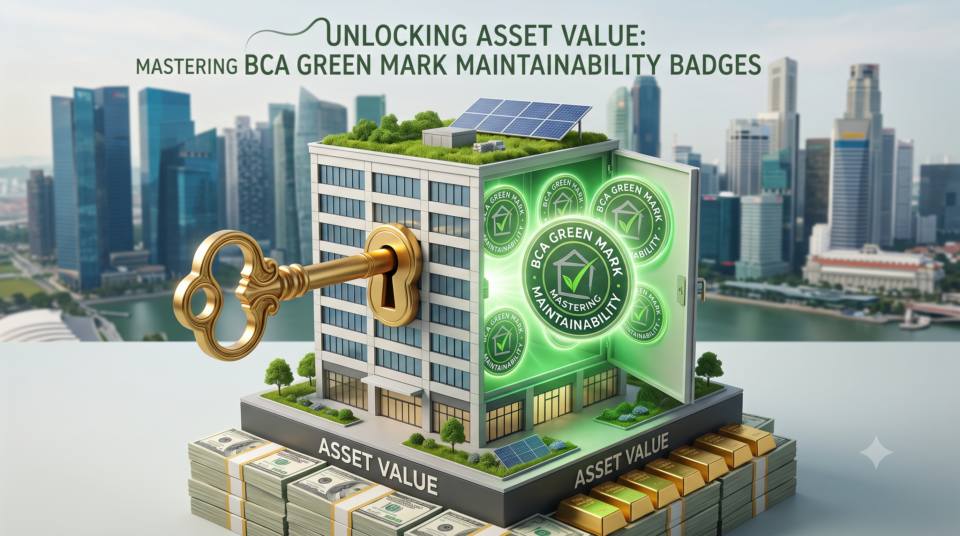
Unlocking Asset Value: mastering BCA Green Mark Maintainability badges
The shift from capital expenditure to operational efficiency
For decades, the standard narrative of green building focused predominantly on the “green”: reducing carbon footprints through energy efficiency during construction. While critical, this CapEx-centric view overlooks the vast majority of a building’s life cycle: operations and maintenance (OpEx). Under the Building and Construction Authority’s (BCA) refreshed Green Mark 2021 (GM:2021) framework, this balance is shifting.
GM:2021 introduced Maintainability (Mnt) as a key sustainability section, rewarding projects that go beyond design aesthetics to prioritize operational ease, durability, and standardisation of parts. Achieving the corresponding Badge showcases a commitment to whole-life sustainability, demonstrating that a green building must also be an operable building.
The tropical challenge: Humidity, haze, and high demand
Maintainability is a global asset management principle, but in Singapore, it is a climate necessity. The city-state’s persistent tropical humidity creates distinctive challenges. Buildings are constant battlegrounds against moisture infiltration, condensation, and the subsequent growth of mold and mildew. These issues don’t just degrade the building’s aesthetics; they compromise material integrity, deteriorate indoor environmental quality (IEQ), and drive up energy use via compromised HVAC systems.
Furthermore, commercial properties in Singapore operate underworld-class infrastructure expectations within a very strict regulatory environment. The equipment runs harder, the envelope is tested daily by extreme heat, and maintenance teams must navigate stringent safety protocols. A building designed purely for Green Mark points on its opening day will struggle to retain those standards unless maintainability is baked into its foundation.
Mastering maintainability: Key strategic pathways
To unlock the Maintainability badge, developers, architects, and facility managers must collaborate on three distinctive pillars:
1. Design for Access and Standardisation
Green Mark now allocates credits to ensure maintenance teams can do their jobs efficiently and safely.
-
Accessible Plant Rooms: credits are available for plant rooms with sufficient clearance, ergonomic workflow design, and logical equipment positioning to allow for easy part replacement rather than full system downtime.
-
Standardisation of Parts: By reducing the variety of components (light fixtures, HVAC valves, seals), owners can dramatically reduce the required inventory costs and simplify contractor training. Standardisation directly improves maintenance responsiveness.
2. Durability and Envelop Integrity
A building that lasts longer uses fewer resources over its life.
-
Material Selection: GM:2021 encourages specifying materials that resist moisture absorption, corrosion, and UV degradation. This is crucial for facades and roofs in Singapore.
-
Humidity Management: Maintainability guidelines focus on thermal bridging mitigation and enhanced envelope sealing to prevent moisture ingress, which is the root cause of mold and structural decay.
3. Technology Integration: From BIM to Predictive Maintenance
Singapore’s leader status as a Smart Nation expects sophisticated approaches.
-
BIM for FM: points can be gained by integrating Building Information Modelling (BIM) models during design and using them to create “As-Built” digital twins that are actually useful for facility management. This ensures contractors are replacing the right parts with the right specifications.
-
IoT Sensors: Integrating Internet of Things (IoT) sensors can track everything from material moisture levels to equipment vibration. This data enables a shift from reactive firefighting to predictive maintenance, identifying issues before they disrupt operations or compromise Green Mark certification standards.
Key Strategic Pathways to Mastering Maintainability
Achieving maintainability requires early and continuous collaboration among developers, architects, and facility managers across three key pillars:
1. Design for Safety and Standardisation
Green Mark allocates credits for making maintenance work both safe and efficient.
-
Accessible Systems: Projects can earn points by providing ample plant room space, safe maintenance access, and standardized equipment that simplifies repair and replacement.
-
Part Standardisation: By minimizing the variety of components, owners reduce inventory requirements and simplify maintenance logistics, directly improving response times.
2. Envelope Integrity and Material Durability
A durable building envelope directly uses fewer resources over its life.
-
Enhanced Sealing: Maintainability guidelines focus on thermal bridging mitigation and superior envelope sealing to prevent moisture ingress, the root cause of standard structural decay.
-
Material Selection: GM:2021 encourages specifying high-performance, non-corrosive materials that withstand Singapore’s humidity and UV degradation.
3. Proactive Technology Integration
Singapore’s status as a leader in smart city technology is reflected in these standards.
-
IoT Monitoring: IoT sensors can continuously track data points such as vibration or moisture levels. This transforms upkeep from reactive firefighting to proactive, data-driven maintainability.
-
Digital Twins for FM: BIM models can be leveraged to create “as-built” digital twins, which are useful for facility managers. These provide contractors with exact specifications for replacements and simplified system maps.
Summary: Whole-Life Asset Management is Green Mark Value
A building that lasts longer is fundamentally more sustainable. Designing for maintainability is not just about earning a Green Mark badge; it is about building value that directly hedges against the escalating OpEx costs of Singapore’s urban environment.
